
Textiles as warmth in the North
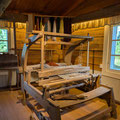
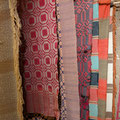
Carpets have always played an important role in Finnish homes. They keep out draughts, improve the acoustics of wooden houses and bring a sense of warmth into otherwise simple interiors. Especially in Lapland, carpets are closely tied to the culture of living. Three main types stand out: Räsymatto, the practical rag rug, Ryijy, the long-pile wool rug, and Raanu, the flat woven textile typical of northern Finland.
Räsymatto, the practical rag rug
Räsymatto emerged in the late 18th century when families began to recycle old clothing and household textiles. The fabric was cut into strips and woven into durable rugs. They protected floors, added warmth and were easy to wash, which made them ideal for kitchens, hallways and living rooms. Even today the summer washing of rugs at riversides or lakeshores is a tradition. Every Räsymatto carries the story of a household, since each strip of fabric came from garments once worn in daily life.
Ryijy, from protection to art
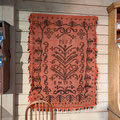
Ryijy has roots in the 15th century. Originally they served as blankets during cold winter nights or sleigh rides. Knotted from wool with a long pile, they provided excellent insulation. Later they became more elaborate, decorated with symbols, patterns and colors. By the 18th and 19th century, a Ryijy was part of a bride’s dowry, gifted at weddings and kept as a family treasure.
In the 20th century Ryijy experienced a renaissance as a national textile art. Designers and weavers elevated them into museum pieces and collectible art objects. Today Ryijy are part of exhibitions, design collections and modern reinterpretations.
Raanu, clarity from Lapland
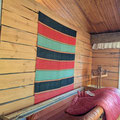
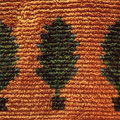
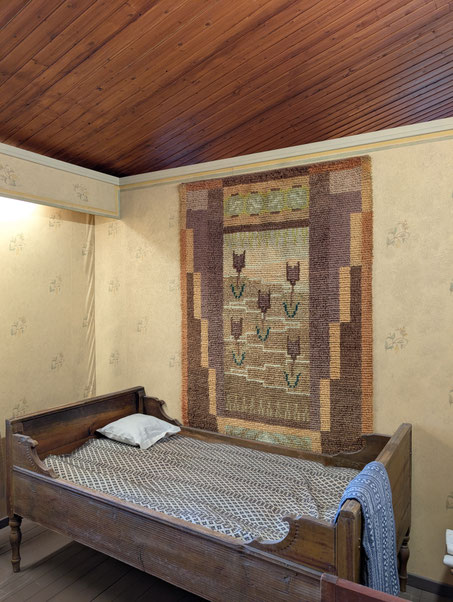
The Raanu is a flat woven wool textile with geometric shapes and bold color fields. In Lapland they were used as wall hangings, bed covers and blankets for sleigh rides. After the Second World War, weaving workshops revived the tradition and Raanu became a symbol of Lapland’s identity, especially through the production of Lapin Raanu in Rovaniemi.
Sámi influences and special decorations
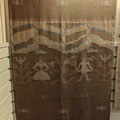
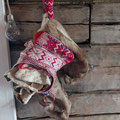
Alongside Finnish carpet traditions, Sámi textiles from northern Lapland often included additional materials and symbolic decorations. Reindeer hair was sometimes used as insulating fibre, while horn or bone pieces were woven into fringes and borders. Metal plaques, tiny bells and rattling ornaments were also added. These elements were not merely decorative but carried spiritual meaning: sound was believed to ward off evil spirits. From the 18th century onwards glass beads reached Lapland through trade and were used in ceremonial textiles. Such pieces were never everyday rugs but festive or ritual textiles rooted in Sámi culture.
Dowry and symbolic meaning
Carpets played an important role in dowry traditions. Ryijy and Raanu were among the most valuable wedding gifts. They symbolised warmth, stability and the beginning of a shared life. Many pieces were monogrammed or dated to mark a wedding or a house-building, which makes them not only functional but also historical documents.
Value, cost then and now
Historically carpets were costly. In the 19th century, the value of a Ryijy could equal a quarter of a farm worker’s annual income. Many families could only afford them by weaving their own. Possessing one was a clear sign of prosperity.
Today the prices are very different but still significant. The material costs for a large Ryijy are around 500–700 EUR, and a finished handmade piece may reach 4,000–5,000 EUR. On the international art market, mid-20th century Ryijy by famous designers sell for 2,800–3,500 USD. Antique Ryijy from the 19th century appear occasionally at auctions and can range from 300 EUR for worn pieces to several thousand for well-preserved examples.
| Category | Price today | Meaning in the past |
|---|---|---|
| New large Ryijy | 4,000–5,000 EUR | Part of a bride’s dowry, family heirloom |
| Vintage Ryijy (20th c.) | 2,800–3,500 USD | Collectible design, long-term investment |
| Antique Ryijy (19th c.) | 300–several thousand EUR | Status symbol equal to months of income |
Lifespan and repair
With proper care, these carpets can last for generations. Families often still own pieces from the 19th century. Räsymatto are relatively easy to repair by replacing individual fabric strips. Ryijy and Raanu are more complex but small holes can be darned or new knots added. Finland has textile conservators specialised in restoring historic carpets.
Care has always been important. Rugs were regularly aired out, washed in summer at riversides or cleaned in snow during winter. Snow cleaning was a gentle way of refreshing wool fibres by laying the carpet on fresh snow and beating out dust.
Why carpets mattered in Finnish wooden houses
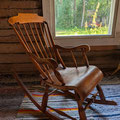
Wooden houses let in draughts and carried sound. Textiles balanced this by insulating walls and floors and softening acoustics. Räsymatto prevented slipping on wooden floors, while Ryijy and Raanu hanging on walls or placed at bedheads kept out cold. Carpets turned simple timber interiors into warm and personal living spaces.
Conclusion
Finnish carpets are more than decoration. They are protectors, storytellers and works of art. Räsymatto represents everyday pragmatism and recycling. Ryijy carries both protection and artistic meaning. Raanu embodies the clarity of Lapland’s weaving tradition. Sámi textiles with reindeer hair, beads and rattling ornaments add spiritual and ceremonial dimensions. Together they show why Finnish interiors may look simple yet feel full of warmth, history and identity.
Sources and further reading:
-
National Museum of Finland (Kansallismuseo): Ryijy collections
-
Lapin Maakuntamuseo, Rovaniemi: exhibitions on Raanu traditions
-
Taito Finland: weaving courses and documentation
-
Marimekko: design history of the Räsymatto pattern
-
Sámi Museum Siida, Inari: Sámi textile culture and symbolism
-
Bukowskis Auctions, Helsinki: market prices for antique Ryijy
-
1stdibs and Pamono: international sales of vintage Ryijy